
Key Takeaways
- PPE accounting records long-term business assets. Property, Plant and Equipment (PPE) generally includes tangible assets such as machinery, vehicles, buildings and office equipment that businesses use in their operations.
- Not every business purchase qualifies as PPE. Businesses must consider asset recognition requirements and distinguish capital expenditure from ordinary operating expenses.
- Depreciation spreads an asset’s depreciable amount over its useful life. Common methods include straight-line, reducing-balance and units-of-production depreciation. Accounting depreciation is different from Malaysian tax capital allowances.
- Accurate PPE records support reliable financial reporting. Businesses should maintain fixed asset registers, supporting purchase documents, depreciation schedules and disposal records.
- Malaysian accounting standards affect PPE treatment. Businesses should apply the relevant requirements under MFRS 116 or MPERS, depending on their applicable financial reporting framework.
- PPE accounting requires ongoing attention. Repairs, improvements, impairment, revaluation where permitted, and asset disposals may affect accounting records and financial statements.
When a Malaysian business purchases machinery, company vehicles, office equipment, or other long-term assets, recording the purchase is only the beginning.
Business owners must also understand how these assets should be valued, depreciated, and reported in their financial statements.
PPE accounting refers to the accounting treatment of Property, Plant and Equipment (PPE), which generally includes tangible assets held for business operations and expected to be used for more than one reporting period.
It covers how businesses recognise asset costs, calculate depreciation, account for improvements or impairment, and record asset disposals.
For Malaysian small and medium enterprises (SMEs), understanding PPE accounting helps prevent common issues such as incorrect asset classification, inaccurate depreciation calculations, and incomplete fixed asset records.
These errors can affect reported profits, asset values, and the reliability of financial information used for business decisions.
This guide explains 10 essential facts about PPE accounting, including practical examples and the relevant requirements under MFRS 116 and MPERS, helping Malaysian business owners better understand their accounting responsibilities and maintain clearer financial records.
Simplify Your Tax Management Today!
Partner with Procheck today to unlock your business’s full potential. Our team of experts is ready to help you navigate taxation challenges and achieve your strategic goals.
Request a Free Consultation
Get started with a no-obligation consultation to discover how we can transform your financial operations.
1. What Is PPE Accounting and Why Does It Matter?
PPE accounting is the process of recording, measuring, depreciating, and reporting Property, Plant and Equipment used in business operations.
These assets are generally purchased for long-term use rather than immediate resale.
For Malaysian SMEs, proper PPE accounting helps ensure that business assets are accurately reflected in financial statements.
It also provides useful information when reviewing business performance, planning equipment replacements, or making investment decisions.
What Does Property, Plant and Equipment Mean?
Property, Plant and Equipment refers to tangible assets held for producing or supplying goods and services, rental to others, or administrative purposes.
These assets are expected to be used for more than one reporting period.
For example, a manufacturing company may purchase machinery to produce goods, while an accounting firm may invest in computers and office furniture to support daily operations.
Although the assets serve different purposes, both businesses need to determine the appropriate accounting treatment for their long-term equipment.
Why Is PPE Classified as a Non-Current Asset?
PPE is generally classified as a non-current asset because it provides economic benefits over multiple accounting periods.
Unlike inventory, which is ordinarily purchased or produced for sale, PPE supports ongoing business activities.
For example, a delivery company may use its vehicles for several years.
The vehicles are not normally treated as inventory because their purpose is to deliver goods rather than to be sold as part of ordinary business operations.
Correct classification helps business owners understand the resources available to support their operations.
2. What Are Common Examples of PPE Assets?
Different businesses own different types of PPE depending on their industry, size, and operational requirements.
A Malaysian SME does not need to own a factory or expensive machinery to have PPE.
Even smaller businesses may hold equipment that qualifies as property, plant and equipment.
Which Business Assets Qualify as PPE?
Common examples include:
PPE category | Malaysian business example |
Machinery | Production machines used in manufacturing |
Vehicles | Company-owned delivery vans and operational vehicles |
Office equipment | Computers, printers, and office equipment |
Furniture and fittings | Office desks, chairs, and shelving |
Buildings | Owner-occupied offices, factories, and warehouses |
Land | Land held for qualifying business use |
These assets generally support business activities over more than one reporting period.
However, an item is not automatically classified as PPE simply because it appears on this list.
Its intended use, ownership or control arrangements, and the applicable accounting requirements must also be considered.
Which Business Assets Are Not PPE?
Some business assets fall under other accounting categories.
Examples include:
- Inventory: Goods held for sale in ordinary business operations.
- Intangible assets: Assets such as qualifying software licences, patents, or trademarks.
- Investment property: Property held primarily to earn rentals or for capital appreciation, where the relevant investment property requirements apply.
- Ordinary consumables: Items typically used during routine operations.
Certain leased assets may also require separate assessment under the applicable lease accounting requirements.
Businesses should classify assets according to their actual economic purpose rather than relying only on purchase descriptions.
3. When Should a Business Recognise PPE?
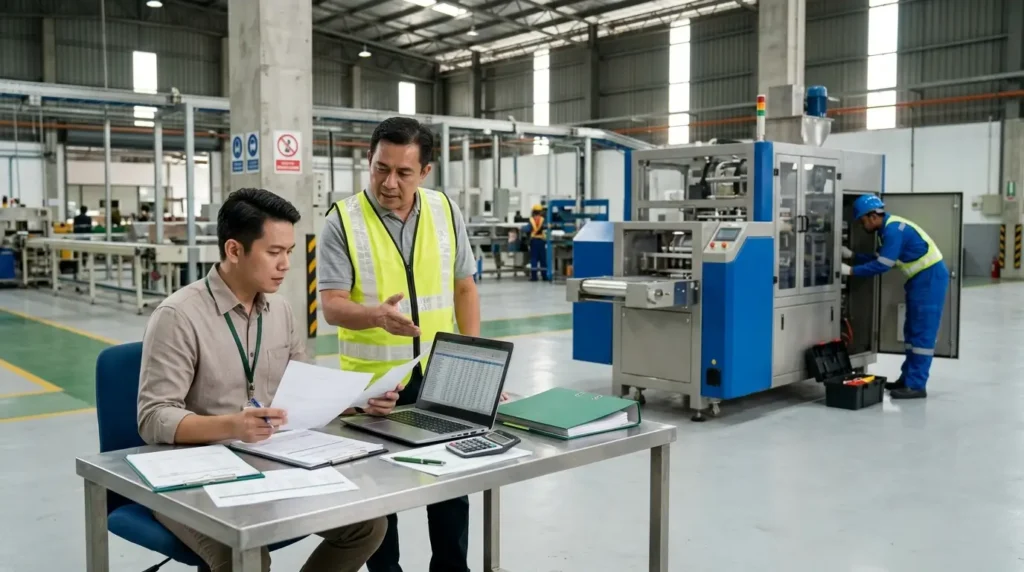
Buying equipment does not necessarily mean every related payment should immediately be recorded as PPE.
Businesses must assess whether the purchase meets the relevant asset recognition requirements.
What Are the Recognition Criteria?
Under the recognition principles of MFRS 116, the cost of a PPE item is recognised as an asset when:
- It is probable that future economic benefits associated with the asset will flow to the business.
- The cost of the asset can be measured reliably.
For example, a printing company purchasing a machine for ongoing production would ordinarily assess the machine as PPE because it is expected to support future operations and its acquisition cost can be determined.
The final treatment must consider the applicable financial reporting framework and the particular facts of the transaction.
How Is Capital Expenditure Different from Operating Expenses?
Capital expenditure generally involves acquiring or improving assets that provide benefits over more than one reporting period.
Operating expenses normally relate to routine business activities.
Consider a company that purchases new production equipment while also paying for regular machine cleaning.
The new equipment may qualify for capitalisation as PPE.
Routine cleaning would ordinarily be recorded as an operating expense because it maintains existing operations rather than creating a separately recognisable asset or qualifying improvement.
Incorrectly treating operating expenses as PPE can overstate assets and affect reported profits.
Similarly, recording qualifying PPE purchases entirely as expenses can distort financial results.
Which Documents Support PPE Recognition?
Businesses should maintain purchase invoices, payment records, supplier agreements, delivery documents, and other relevant supporting information.
These documents help establish the asset’s cost, acquisition details, and purpose.
Maintaining organised accounting records also helps businesses trace asset transactions and prepare financial information for review.
4. How Is the Initial Cost of PPE Measured?
The initial recorded cost of PPE may include more than the price shown on the supplier’s invoice.
Businesses must identify costs that are directly attributable to bringing the asset to the location and condition necessary for its intended operation.
Which Purchase and Installation Costs Can Be Capitalised?
Depending on the circumstances, qualifying PPE costs may include:
- Purchase price after applicable discounts and rebates.
- Import duties and non-refundable purchase taxes.
- Transportation and delivery expenses.
- Installation and assembly costs.
- Necessary testing costs.
- Relevant professional fees.
- Qualifying initial dismantling or site restoration obligations.
Not every cost related to a purchase can be capitalised.
Each item must meet the relevant accounting requirements.
How Do You Calculate PPE Cost Using an RM Example?
Suppose a Malaysian manufacturing business purchases a machine with the following expenses:
Cost item | Amount |
Machine purchase price | RM80,000 |
Delivery | RM2,000 |
Installation | RM3,000 |
Necessary testing | RM1,000 |
Total initial PPE cost | RM86,000 |
Assuming all four amounts qualify for capitalisation, the machine’s initial cost would be RM86,000.
This amount becomes the starting point for subsequent accounting measurements, including depreciation.
The example excludes any separate restoration obligation, financing consideration, or other transaction-specific adjustment.
Which Costs Should Be Expensed Instead?
Certain expenditures are generally recognised as expenses rather than added to PPE cost.
Examples may include routine staff training, general administration expenses, ordinary maintenance, and costs incurred after an asset is ready for its intended use that do not otherwise qualify for capitalisation.
For SMEs, reviewing these expenses before finalising accounts helps reduce incorrect asset valuations.
5. How Does PPE Depreciation Work?

Depreciation is one of the most important elements of PPE accounting because most depreciable business assets are used over several accounting periods.
Rather than recognising the full depreciable amount as an expense in the purchase year, depreciation allocates that amount systematically over the asset’s estimated useful life.
What Are the Common Depreciation Methods?
The appropriate depreciation method should reflect the expected pattern in which the asset’s future economic benefits are consumed.
Three commonly discussed methods are:
Straight-Line Depreciation
This method allocates an equal depreciation amount across each full year of the asset’s useful life, assuming estimates remain unchanged.
For example, a company purchases equipment costing RM50,000, expects a residual value of RM5,000, and estimates a useful life of five years.
Annual depreciation:
(RM50,000 − RM5,000) ÷ 5 years = RM9,000 per year
Under these assumptions, the annual depreciation expense is RM9,000.
Reducing-Balance Depreciation
This method applies a depreciation rate to the asset’s carrying amount, generally resulting in higher depreciation charges during earlier years.
Suppose equipment initially costs RM40,000 and the business uses a reducing-balance rate of 20% for illustration.
- Year 1: RM40,000 × 20% = RM8,000 depreciation.
- Year 2 opening carrying amount: RM32,000.
- Year 2: RM32,000 × 20% = RM6,400 depreciation.
The calculation illustrates the method, but the selected rate must be appropriate to the expected consumption pattern and residual value.
Units-of-Production Depreciation
This method allocates depreciation according to an asset’s actual usage or production output.
It may be suitable for equipment whose economic benefits are closely connected to measurable production activity.
For example, a machine expected to manufacture a specified number of units over its lifetime may be depreciated based on the number of units produced during each period.
How Do Useful Life and Residual Value Affect Depreciation?
Useful life refers to the period or production capacity over which an asset is expected to be available for use.
Residual value is the estimated amount a business would currently obtain from disposing of the asset, after estimated disposal costs, if it were already in the expected condition at the end of its useful life.
Businesses should review relevant depreciation estimates and methods in accordance with their applicable accounting framework.
Depreciation generally begins when an asset is available for use, not necessarily when the business first starts generating revenue from it.
Land ordinarily is not depreciated because it generally has an unlimited useful life, although certain land-related assets or components may be depreciable.
How Is Accounting Depreciation Different from Tax Capital Allowances?
Accounting depreciation and Malaysian tax capital allowances serve different purposes.
Accounting depreciation is used to allocate the depreciable amount of an asset for financial reporting.
Tax capital allowances are determined under Malaysian tax legislation and applicable eligibility conditions.
Consequently, the depreciation charged in financial statements may differ from the capital allowances claimed for tax purposes.
SME owners should not assume that an accounting depreciation rate automatically determines the allowable tax deduction.
6. How Should Businesses Account for PPE Repairs, Improvements and Revaluation?
An asset’s accounting treatment does not end after its initial purchase.
Throughout its useful life, a company may incur maintenance costs, replace important components, upgrade equipment, or reassess its carrying amount.
When Should Repairs Be Expensed or Capitalised?
Routine servicing and maintenance are generally recorded as expenses when incurred.
For example, regular machine lubrication, cleaning, or minor servicing usually relates to maintaining an asset’s existing operating condition.
However, qualifying replacement components, major inspections, or improvements may need to be capitalised when the applicable recognition requirements are met.
Any replaced component’s remaining carrying amount may also need to be derecognised.
Businesses should examine the nature of the expenditure rather than categorising every repair invoice in the same way.
What Is the Difference Between the Cost and Revaluation Models?
Under MFRS 116, businesses may apply the cost model or revaluation model to an eligible class of PPE, subject to the standard’s requirements.
Cost model: The asset is subsequently measured at cost less accumulated depreciation and accumulated impairment losses.
Revaluation model: The asset is measured using a revalued amount based on fair value at the revaluation date, less subsequent accumulated depreciation and impairment, subject to the relevant conditions.
A revaluation may affect financial statements and requires appropriate accounting treatment and disclosures.
How Does Subsequent Measurement Differ Under MPERS?
Businesses applying MPERS must follow the relevant requirements of that framework rather than assuming every MFRS provision applies identically.
Differences in measurement options, impairment treatment, and related disclosures should be checked against the version of MPERS applicable to the reporting period.
7. What Happens When PPE Is Impaired or Disposed Of?
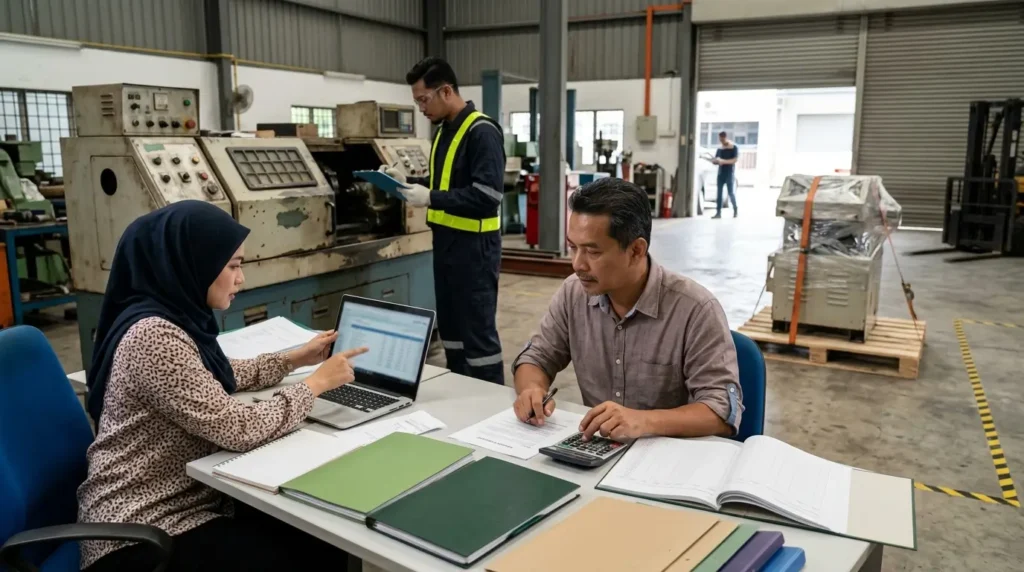
Business assets may lose value, become obsolete, suffer damage, or reach the end of their useful lives.
PPE accounting must reflect these developments where required by the applicable accounting standards.
When Should an Asset Be Assessed for Impairment?
Impairment arises when an asset’s carrying amount exceeds its recoverable amount under the relevant impairment requirements.
Potential indicators include:
- Significant physical damage.
- Technological obsolescence.
- Unexpected declines in asset performance.
- Adverse changes in business or market conditions.
- Plans to discontinue operations involving an asset.
For example, an SME may own production equipment that can no longer operate efficiently because of technological changes.
Management may need to assess whether the equipment’s carrying amount remains recoverable.
An impairment assessment is not automatically required to produce a loss simply because an asset is old. The applicable requirements, indicators, and measurement must be considered.
How Is a Gain or Loss on Disposal Calculated?
When a PPE asset is sold or otherwise disposed of, the business generally derecognises its carrying amount and determines the resulting gain or loss.
Consider this illustrative vehicle disposal:
Item | Amount |
Original vehicle cost | RM100,000 |
Accumulated depreciation | RM70,000 |
Carrying amount | RM30,000 |
Net disposal proceeds | RM35,000 |
Gain on disposal | RM5,000 |
The RM5,000 gain represents the difference between the net disposal proceeds and the vehicle’s carrying amount.
The actual accounting entry must also remove the asset’s original cost and accumulated depreciation from the records.
If the proceeds were lower than the carrying amount, the transaction would instead result in a disposal loss.
8. How Does PPE Accounting Affect Financial Statements?
Accurate PPE accounting contributes to reliable financial reporting because asset recognition, depreciation, impairment, and disposal can affect both financial position and reported performance.
For SMEs, these figures may also support budgeting, asset replacement planning, and discussions with lenders or business advisers.
Where Is PPE Reported in the Financial Statements?
PPE is generally presented within non-current assets in the statement of financial position.
Its reported amount reflects the applicable subsequent measurement basis, together with accumulated depreciation and impairment adjustments where relevant.
For example, if equipment originally cost RM60,000 and accumulated depreciation totals RM18,000, its carrying amount would be RM42,000, assuming no other adjustments.
This amount is not necessarily the equipment’s current market value.
What Do Carrying Amount and Accumulated Depreciation Mean?
Carrying amount is the amount at which an asset is recognised after deducting relevant accumulated depreciation and impairment losses, subject to the applicable measurement model.
Accumulated depreciation represents depreciation recognised over the asset’s life up to the reporting date.
These figures help business owners understand the accounting value of equipment and other operational assets.
Depreciation may also affect reported profit because the depreciation expense is generally recognised in profit or loss unless included in the carrying amount of another asset under the applicable rules.
Maintaining accurate PPE information can strengthen management reporting by making asset-related costs and balances easier to interpret.
What PPE Information Must Be Disclosed?
Depending on the applicable accounting framework, relevant disclosures may include:
- Measurement bases applied.
- Depreciation methods.
- Useful lives or depreciation rates.
- Gross carrying amounts.
- Accumulated depreciation and impairment.
- Reconciliations showing asset additions, disposals, and other movements.
The required disclosures should be confirmed against the standards applicable to the entity and reporting period.
9. Which Malaysian Accounting Standards Apply to PPE?
Malaysian businesses should understand which financial reporting framework applies before deciding how PPE transactions should be recognised and measured.
The applicable accounting requirements may differ depending on the nature and reporting obligations of the entity.
How Does MFRS 116 Apply to PPE?
MFRS 116, Property, Plant and Equipment, addresses the recognition and measurement of qualifying tangible business assets.
Its key subject areas include initial cost, subsequent measurement, depreciation, derecognition, and financial statement disclosures.
For SMEs applying the MFRS framework, appropriate use of MFRS 116 is important when preparing financial statements.
Other standards may also be relevant to specific issues, such as impairment, leases, and the determination of fair value.
What Is the Role of MPERS Section 17?
The Malaysian Private Entities Reporting Standard (MPERS) provides a financial reporting framework for qualifying private entities.
Section 17 addresses property, plant and equipment.
Businesses applying MPERS should refer to its relevant recognition, measurement, depreciation, subsequent expenditure, and derecognition provisions.
However, SMEs should not assume that MPERS requirements are identical to MFRS 116.
How Can Businesses Identify Their Applicable Reporting Framework?
A company’s applicable financial reporting framework depends on its circumstances and relevant reporting requirements.
Business owners should confirm their entity’s reporting classification and accounting obligations with a qualified professional.
During business expansion, group restructuring, or changes in ownership, reviewing these requirements can be particularly useful.
For example, a company preparing for a change in corporate structure may need to assess whether its current accounting policies and asset records remain appropriate for future reporting obligations.
10. What Common PPE Accounting Mistakes Should Malaysian SMEs Avoid?

Many PPE accounting problems arise from inconsistent recordkeeping or uncertainty about the correct treatment of business assets.
Identifying these problems early can help SMEs maintain clearer financial information and reduce avoidable corrections during financial statement preparation.
Incorrect Asset Classification and Depreciation
A common issue occurs when business owners record qualifying fixed assets as ordinary expenses or capitalise costs that should be expensed.
Another problem is applying depreciation without considering useful life, residual value, or the expected pattern of asset consumption.
For example, applying the same depreciation assumptions to office furniture and heavily used manufacturing machinery may not appropriately reflect their different circumstances.
Businesses should establish consistent accounting policies and review significant asset estimates when required.
Incomplete Fixed Asset Registers
A fixed asset register provides a structured record of business assets.
Useful information may include:
- Asset identification number and description.
- Purchase or recognition date.
- Supplier and purchase documentation.
- Initial recorded cost.
- Asset location or responsible department.
- Estimated useful life and residual value.
- Depreciation method and accumulated depreciation.
- Carrying amount.
- Disposal or impairment details, where applicable.
Maintaining an accurate register helps businesses reconcile their accounting records with the assets they actually hold.
It can also be particularly useful during office relocation, business restructuring, or changes in management responsibilities.
Unrecorded Asset Disposals and Weak Internal Controls
Some businesses remove damaged or obsolete equipment from their premises without updating their accounting records.
As a result, assets that are no longer held may remain in the fixed asset register or financial statements.
To reduce this risk, businesses can establish practical internal controls such as:
- Recording all qualifying asset purchases promptly.
- Keeping invoices and supporting documents in an organised filing system.
- Maintaining and updating a fixed asset register.
- Reviewing depreciation calculations and significant accounting estimates.
- Conducting periodic physical asset checks.
- Documenting asset transfers, disposals, and write-offs.
- Reconciling the asset register with the general ledger.
These practices support more consistent financial reporting and provide better documentation for accounting reviews.
For SME owners without a large internal finance department, assigning clear responsibility for asset records and conducting periodic reviews can be a practical starting point.
Conclusion: Why Proper PPE Accounting Matters for Malaysian SMEs
Understanding PPE accounting helps Malaysian business owners manage more than the purchase cost of machinery, vehicles, buildings, and office equipment.
It provides a structured way to recognise business assets, calculate depreciation, monitor asset values, and maintain reliable financial records.
For SMEs, the most practical starting point is to classify assets correctly, retain supporting documents, maintain an updated fixed asset register, and review depreciation and disposal records consistently.
Businesses should also ensure that their PPE accounting policies align with the financial reporting framework applicable to them, whether MFRS or MPERS.
Accurate asset records can be particularly useful when preparing financial statements, planning equipment replacements, expanding operations, or reviewing financial processes during organisational changes.
Need Support With Your Business Accounting Records?
Managing PPE alongside bookkeeping, financial reporting, tax compliance, and other accounting responsibilities can be challenging for SMEs without a dedicated internal finance team.
Procheck provides accounting and related advisory support to help Malaysian businesses organise financial information, maintain accounting documentation, and prepare more reliable reports for business decision-making.
If your company needs assistance reviewing its accounting records or strengthening its financial reporting processes, explore Procheck’s professional accounting services to understand the available support.
Clearer accounting records support more informed business decisions.
Frequently Asked Questions About PPE Accounting
Is PPE the Same as Fixed Assets?
PPE is commonly referred to as tangible fixed assets because it includes physical assets used in business operations over more than one reporting period.
Examples include machinery, company vehicles, office equipment, and owner-occupied buildings.
However, the broader term fixed assets may sometimes be used to describe other long-term assets.
For financial reporting, businesses should apply the correct asset classification under their applicable accounting standards.
Is Land Depreciated Under PPE Accounting?
Land generally is not depreciated because it normally has an unlimited useful life.
Buildings, however, usually have finite useful lives and are subject to depreciation.
When land and buildings are acquired together, their costs should generally be accounted for separately where required.
Certain land-related assets may have limited useful lives and require different treatment.
Businesses should assess the nature of the asset before determining the appropriate depreciation policy.
Can Small Equipment Purchases Be Expensed Immediately?
Small equipment purchases may be expensed when the treatment is consistent with the applicable accounting framework, materiality considerations, and the company’s accounting policies.
For example, a business may establish a reasonable capitalisation policy for low-value items.
However, there is no single universal purchase-value threshold that automatically applies to every Malaysian company.
Businesses should also distinguish financial reporting treatment from tax treatment, as the rules for claiming tax deductions or capital allowances may differ.
How Often Should Businesses Review Their Fixed Asset Registers?
Businesses should update their fixed asset registers whenever relevant transactions occur, including asset purchases, transfers, disposals, and write-offs.
They should also perform periodic reconciliations between physical assets, fixed asset registers, and accounting records.
Depreciation estimates, useful lives, and residual values should be reviewed in accordance with the applicable financial reporting framework.
Under MFRS 116, useful lives and residual values are reviewed at least at each financial year-end.
Regular reviews help identify missing assets, outdated records, incorrect depreciation calculations, and unrecorded disposals.