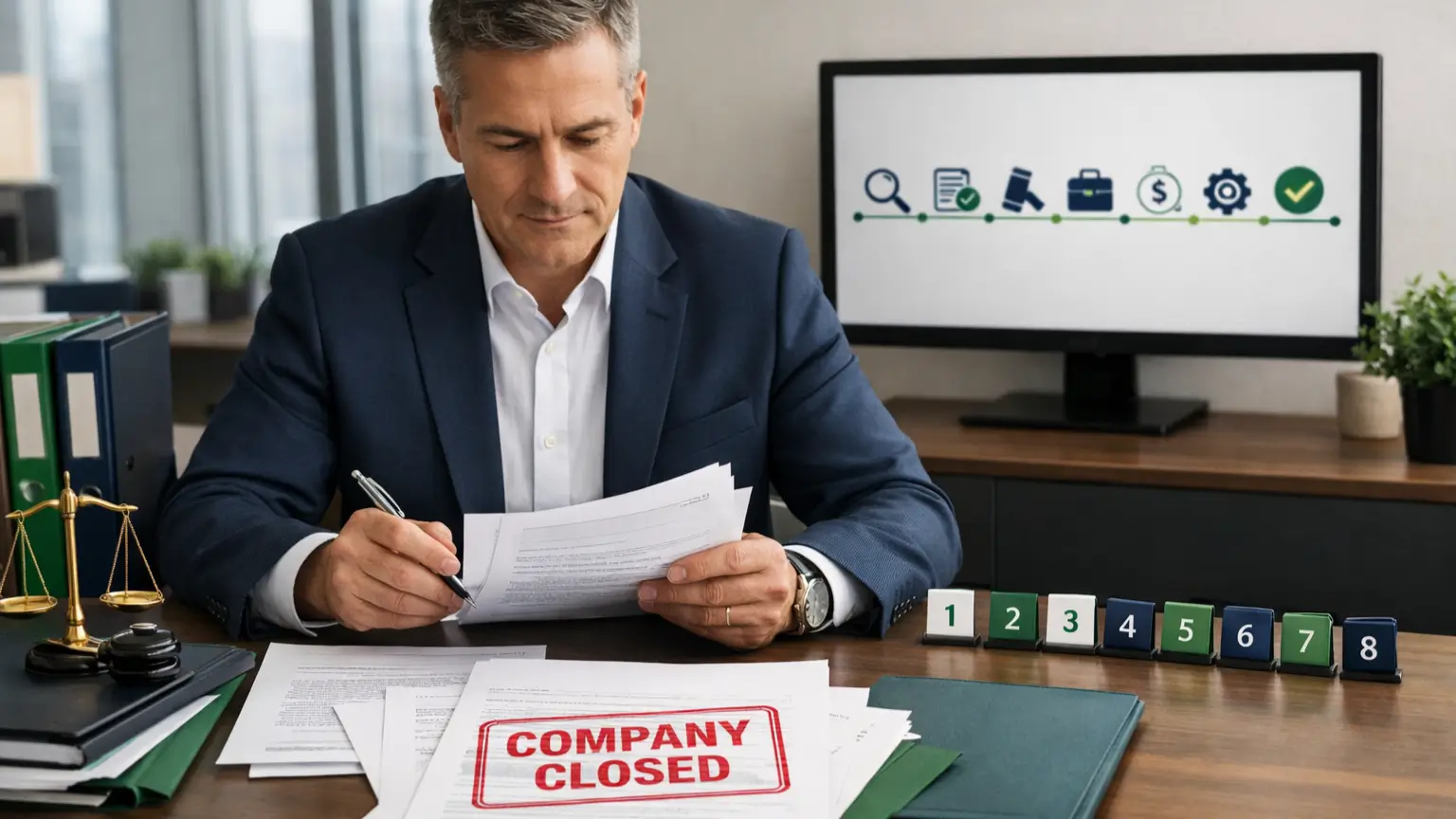
Key Takeaway
Q1: What is winding up company and why does it matter for business owners?
Winding up company is the legal process of closing a company, settling liabilities, realising assets, and ending its existence under Malaysian corporate law. It matters because directors, shareholders, creditors, and regulators all face legal, financial, and compliance consequences if closure is handled poorly.
Q2: How does winding up company work in practice?
Winding up company usually involves reviewing solvency, choosing the correct route, preparing resolutions and filings, appointing a liquidator where required, paying creditors in legal order, and completing dissolution. In Malaysia, the exact process depends on whether the company is solvent, insolvent, or subject to Court action.
Q3: What should the reader do next if they are considering winding up company?
Business owners should review financial records, assess outstanding debts, confirm director responsibilities, and seek coordinated secretarial, accounting, and advisory support before taking action. Early preparation reduces procedural mistakes, protects compliance, and helps businesses close with greater control and clarity.
Winding up company decisions are rarely simple, because they affect directors, shareholders, creditors, employees, statutory records, and the company’s final legal standing under Malaysian corporate compliance requirements.
For SMEs, startups, large corporations, and businesses undergoing restructuring, the process must be handled with accuracy, proper documentation, and a clear understanding of whether the company is solvent, insolvent, or facing creditor action.
In practice, many business owners delay action until debts, filings, and internal records become harder to manage.
That delay can increase exposure to disputes, compliance failures, and avoidable costs.
A structured approach matters because company winding up is not only about stopping operations; it is about closing a company responsibly, settling liabilities correctly, and protecting stakeholders from unnecessary risk.
This is where experienced professional support becomes valuable.
Firms that handle corporate services, accounting advisory, tax matters, and company secretarial work can help business owners review records, prepare resolutions, coordinate compliance steps, and reduce procedural mistakes.
Procheck Faculty Sdn Bhd, with over 25 years of experience in professional services, operates in exactly this space by supporting businesses through regulatory, financial, and corporate governance requirements.
Simplify Your Tax Management Today!
Partner with Procheck today to unlock your business’s full potential. Our team of experts is ready to help you navigate taxation challenges and achieve your strategic goals.
Request a Free Consultation
Get started with a no-obligation consultation to discover how we can transform your financial operations.
That trust is reflected in client feedback. Noor Ariffshah shared that Procheck’s company secretarial service was “very professional and efficient,” while Hans Empire noted that the firm provides “accounting, tax, audit, and company secretary services.”
For business owners considering closure, those capabilities matter when every filing, timeline, and decision must be handled carefully.
In this guide, you will learn the 8 key steps, the legal routes available, the documents required, and when to seek professional help before winding up a company in Malaysia.
What Is Winding Up Company and Why Does It Matter for Business Owners?
Winding up company is the legal process of ending a company’s existence, realising its assets, paying its debts, and distributing any remaining balance to entitled contributories under the applicable corporate framework.
Winding up is not the same as simply ceasing business operations.
A company may stop trading, but it still has unresolved obligations such as statutory filings, creditor exposure, employee matters, tax positions, and record-keeping duties.
For Malaysian business owners, the real issue is not only closure but lawful closure.
How winding up company brings a company’s legal life to an end
Winding up company ends the corporate life cycle by converting assets into cash, settling liabilities, and moving the company toward final dissolution through a formal legal process.
This matters because directors cannot assume that inactivity automatically removes legal risk.
If liabilities, unresolved tax matters, or creditor claims remain, business owners may face prolonged compliance issues and stakeholder disputes.
How winding up company differs from dissolution and bankruptcy
Winding up company is the process, while dissolution is the final outcome after the process is completed, and bankruptcy generally applies to individuals rather than companies.
For practical business planning, this distinction helps owners avoid using the wrong procedure.
A company may also consider striking off in limited situations, but where capital remains, winding up a company through a voluntary route may be the proper solution.
What Are the Main Types of Winding Up Company in Malaysia?
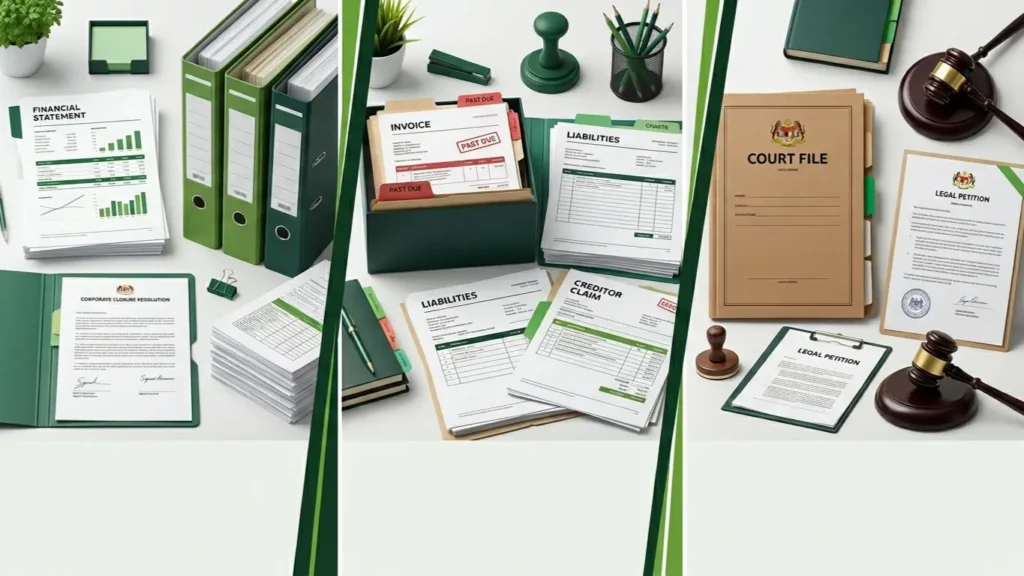
Winding up company in Malaysia generally takes two broad forms: voluntary winding up and compulsory winding up by the Court, with the right route depending on solvency, creditor pressure, and corporate circumstances.
Members’ voluntary winding up for solvent companies
Members’ voluntary winding up is commonly used when the company can pay its debts in full and shareholders want an orderly closure with proper compliance controls.
This route is usually more controlled because the company initiates the process.
For business owners, it is often relevant where a project has ended, a dormant structure is no longer needed, or a strategic restructuring makes closure commercially sensible.
Creditors’ voluntary winding up for insolvent companies
Creditors’ voluntary winding up is generally associated with companies that cannot fully meet liabilities and therefore require creditor involvement in the liquidation process.
This route usually requires careful coordination of financial records, creditor lists, and supporting documentation.
That is where support from Corporate Secretarial Services, accounting, and advisory teams becomes important in reducing procedural mistakes.
Compulsory winding up by the Court
Compulsory winding up occurs through Court action, often after creditor pressure, disputes, or statutory grounds justify judicial intervention.
For business owners, this route is usually more contentious and less controllable than voluntary closure.
It also tends to increase legal complexity, reputational sensitivity, and timeline uncertainty.
What Legal Grounds Usually Lead to Winding Up Company?
Winding up company is usually triggered by insolvency, corporate resolutions, or circumstances where the law permits the Court to intervene for fairness, public interest, or creditor protection.
Inability to pay debts
Inability to pay debts is one of the most recognised commercial triggers because it directly affects creditors, solvency assessments, and the viability of continued trading.
When debts remain unpaid and financial pressure escalates, delaying action can worsen exposure.
Business owners should not wait until records become disorganised or stakeholder communication breaks down.
Special resolution by the company winding up decision
A special resolution allows the company itself to choose closure where shareholders decide that formal winding up is the appropriate course.
This often arises where the company has reached the end of its commercial purpose, restructuring is underway, or owners want a clean and properly documented exit rather than leaving a dormant entity exposed.
Just and equitable grounds
Just and equitable grounds usually apply where serious breakdowns, deadlock, or unfair circumstances make continued corporate existence impractical.
This ground is especially relevant in shareholder disputes or management breakdowns. It is not a casual shortcut; it usually requires careful legal framing and evidence.
What Are the 8 Key Steps in Winding Up Company for Business Owners?
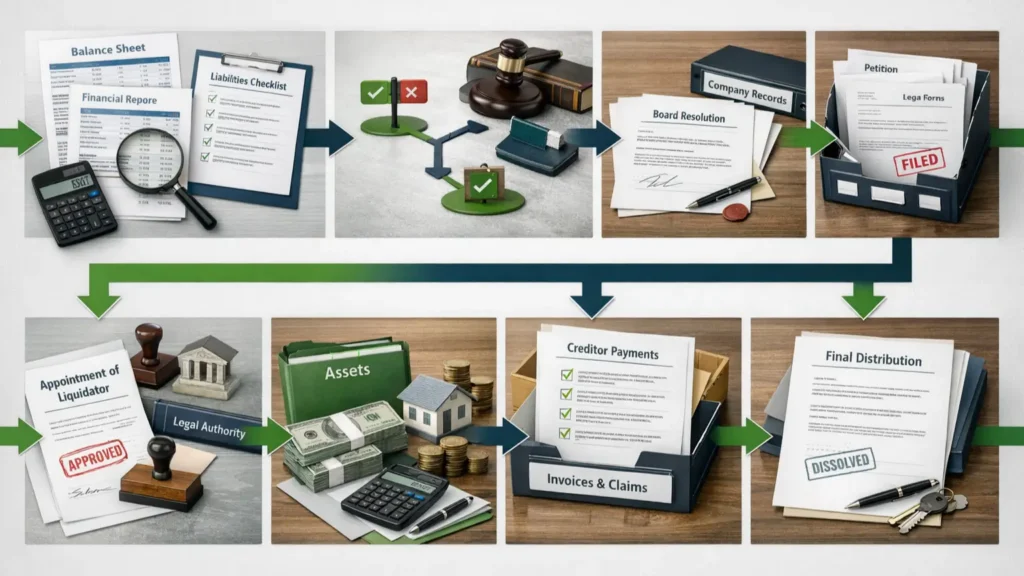
The 8 key steps in winding up company are reviewing solvency, choosing the right route, preparing records, filing documents, appointing the liquidator, realising assets, settling liabilities, and completing dissolution.
Step 1 — Review the company’s solvency, liabilities, and business position
A proper solvency review helps directors understand whether the company is suitable for a members’ voluntary process, a creditors’ process, or possible Court exposure.
This step should include outstanding debts, tax matters, employee obligations, contingent liabilities, and supporting accounting records.
Step 2 — Choose the correct winding up company route
Choosing the correct route determines the filings, approvals, stakeholder involvement, and overall risk profile of the closure exercise.
A wrong procedural choice can create delays, defects, or disputes later.
Step 3 — Prepare resolutions, declarations, and core corporate records for winding up a company
Corporate resolutions, solvency-related documentation, financial schedules, and statutory records form the backbone of a legally defensible winding up file.
This is where weak governance often becomes visible, especially in SMEs that have not maintained records consistently.
Step 4 — File the required notices, petition, and supporting documents under winding up rules
Formal winding up requires prescribed notices, filings, and in some cases petition-related documentation that must comply with procedural winding up rules and timelines.
Precision matters here because service, advertisement, and filing defects can complicate the matter.
Step 5 — Appoint the liquidator or proceed through Court action
The liquidator becomes central to the administration of assets, liabilities, claims, and procedural conduct once the winding up moves into active liquidation.
Step 6 — Collect, protect, and realise company assets
Asset realisation turns company property into distributable value and helps ensure creditor claims are addressed according to legal priority.
Step 7 — Pay creditors and settle liabilities in the proper order
Creditors are not treated identically, because secured, unsecured, and preferential positions affect distribution priority and recovery outcomes.
Step 8 — Complete final distributions and dissolve the company
Once claims are handled and the process is completed, any surplus may be distributed and the company can move toward formal dissolution.
Why timing and procedural accuracy matter in winding up company
Procedural accuracy in winding up company reduces the risk of rejected filings, creditor disputes, Court complications, and avoidable professional cost escalation.
What Should Business Owners Include in a Winding up Checklist Malaysia?
A practical winding up checklist malaysia should cover approvals, solvency records, creditor data, asset schedules, notices, filings, and appointment-related documentation before the process begins.
Core documents and records to prepare
Core documents usually include board and shareholder resolutions, declarations where applicable, financial statements, creditor lists, asset lists, and statutory forms or notices.
For Procheck’s target clients, this is where integrated Company Secretary Services, accounting, and advisory support can save time and reduce compliance gaps.
What Is the Role of the Liquidator in Winding Up Company?
The liquidator manages the collection of assets, review of claims, administration of liabilities, and distribution process in accordance with the legal framework governing liquidation.
Why the liquidator matters to directors and creditors
The liquidator matters because directors lose a large part of operational control, while creditors depend on the liquidation process for transparency, recovery, and procedural fairness.
This is why complete records, accurate disclosures, and early professional preparation are critical before matters reach a more adversarial stage.
Where Can Businesses Refer to the Winding up Rules Malaysia pdf and Why Does It Matter?
The Winding up Rules Malaysia pdf matters because it supports procedural compliance for petitions, notices, service requirements, advertisements, and Court-facing liquidation steps.
Why procedural rules should not be ignored
Procedural rules are not administrative formalities; they shape whether the winding up process is recognised, effective, and enforceable from a compliance perspective.
For business owners, the safest approach is to combine legal, secretarial, and financial review before action starts.
When Should a Business Owner Seek Professional Help for Winding Up Company?
Business owners should seek professional help when debts are mounting, records are incomplete, shareholder alignment is weak, or the company’s closure path is no longer straightforward.
Situations where advisory support adds the most value
Advisory support adds the most value when the company needs coordinated handling of secretarial compliance, financial reporting, tax exposure, creditor communication, and structured closure planning.
For SMEs, startups, and larger entities alike, the goal is not merely to close a company, but to close it with control, clarity, and reduced downstream risk.
Winding up company is not just an administrative closure exercise; it is a regulated legal process that affects assets, liabilities, directors, shareholders, and creditors.
For business owners in Malaysia, the safest approach is to assess solvency early, prepare complete records, choose the correct route, and follow the required procedural steps carefully.
When done properly, the process helps reduce compliance risk, avoids unnecessary disputes, and allows the company to close in a more controlled and defensible way.
If your business is considering closure, it helps to get the structure right before documents are filed or liabilities escalate.
Procheck supports businesses that need governance, compliance, and closure-related coordination through its Company Secretary Services.
For more related guidance on compliance and corporate procedures, you can also explore the Corporate Secretarial Services category.
FAQ
How do I start winding up a company in Malaysia?
Starting a winding up process in Malaysia usually begins with reviewing the company’s solvency, liabilities, shareholder position, statutory records, and outstanding obligations. Once that is clear, business owners can determine whether a members’ voluntary winding up, creditors’ voluntary winding up, or a Court-driven process is the most appropriate route.
What are the legal steps to wind up a private limited company here?
The legal steps generally include reviewing solvency, selecting the correct route, preparing resolutions and supporting records, filing the relevant notices or petition, appointing a liquidator where required, realising assets, settling liabilities in the proper order, and completing dissolution. The exact procedure depends on whether the company is solvent or insolvent.
What is the difference between members’ voluntary winding up and creditors’ voluntary winding up?
Members’ voluntary winding up is typically used when the company is solvent and able to pay its debts in full within the required period, while creditors’ voluntary winding up is used when the company cannot fully meet its liabilities. The difference affects who is involved, how much control the company retains, and the level of creditor participation.
How long does the winding up process typically take in Malaysia?
The timeline depends on the complexity of the company’s records, the number of creditors, the ease of asset realisation, the status of tax matters, and whether disputes arise. A straightforward solvent case may move faster, while an insolvent or contested case usually takes longer because of procedural, legal, and administrative requirements.
What documents are required to initiate winding up a business in Malaysia?
Common documents include board and shareholder resolutions, declarations of solvency where applicable, financial statements, creditor lists, asset schedules, statutory notices, and any petition or affidavit documents needed for the chosen process. In practice, complete and well-organised documentation is one of the most important factors in reducing delay and procedural defects.