
Key Takeaways
What are the 10 common items found in a bank recon statement, and why do they matter?
A bank recon statement commonly includes bank balance, book balance, deposits in transit, outstanding checks, bank charges, interest, direct credits, automatic payments, dishonoured cheques, and errors to verify financial accuracy.
How does a bank recon statement help businesses manage accounting records?
A bank recon statement compares a company’s accounting records with its bank statement.
This bank reconciliation process helps SMEs, corporations, and startups identify timing differences, missed transactions, duplicate entries, bank-initiated transactions, and cash flow discrepancies.
What should businesses do after identifying differences in a bank recon statement?
Businesses should investigate unmatched transactions, correct accounting records, prepare journal entries where needed, and keep supporting documents for tax compliance, audit review, financial reporting, and management decision-making.
A bank recon statement helps businesses confirm whether their bank statement and accounting records show the same cash position.
For SMEs, corporations, startups, and companies preparing for audit, tax filing, financing, or due diligence, this simple document can reveal timing differences, missed entries, bank charges, dishonoured cheques, or recording mistakes before they affect financial reporting.
In Malaysia, businesses that manage multiple payments, supplier transfers, customer collections, payroll transactions, and online banking movements need proper reconciliation discipline.
Without it, the company may believe it has more cash than it actually does, overlook unauthorised deductions, or submit financial records that are incomplete.
For a professional services firm like Procheck Faculty Sdn Bhd, bank reconciliation connects closely with accounting advisory, tax compliance, company secretarial support, internal control review, and business consulting.
Accurate cash records help business owners make better decisions, prepare reliable accounts, and support compliance with regulatory and reporting requirements.
Simplify Your Tax Management Today!
Partner with Procheck today to unlock your business’s full potential. Our team of experts is ready to help you navigate taxation challenges and achieve your strategic goals.
Request a Free Consultation
Get started with a no-obligation consultation to discover how we can transform your financial operations.
Client confidence also matters. Reviews such as
“Good service,” “Friendly and supportive team,” and “Provides accounting, tax, audit, and company secretary services” show the importance of working with a team that explains financial matters clearly and supports businesses with practical guidance.
This article explains the 10 common items found in a bank recon statement, how a bank reconciliation statement is structured, which errors businesses should avoid, and why regular reconciliation supports more reliable accounting records.
What Is Bank Reconciliation and What Is a Bank Recon Statement?
What is bank reconciliation? It is the process of comparing transactions recorded in a company’s accounting records with transactions shown in its bank statement.
A bank recon statement is the document used to record the results of that comparison.
Bank Recon Statement Meaning for Businesses
A bank recon statement helps SMEs, corporations, and startups verify whether cash movements recorded by the bank match the accounting entries maintained in their books.
How Bank Reconciliation Compares Bank Records with Accounting Records
The bank record shows transactions processed by the financial institution, while accounting records show transactions entered by the business through bookkeeping, accounting software, manual records, or the company’s Book of Accounts.
Bank Statement Balance
The bank statement balance is the official closing balance shown by the bank after all processed deposits, withdrawals, transfers, charges, and credits.
The closing balance shown by the bank
This figure becomes the bank-side starting point when preparing the bank recon statement.
Book Balance or Cash Book Balance
The book balance is the company’s internal bank balance based on accounting entries recorded in the cash book, ledger, or accounting software.
The balance shown in the company’s accounting records
This figure becomes the accounting-side starting point before adjusting bank charges, direct credits, interest, or other book-side items.
Why Is a Bank Recon Statement Important?
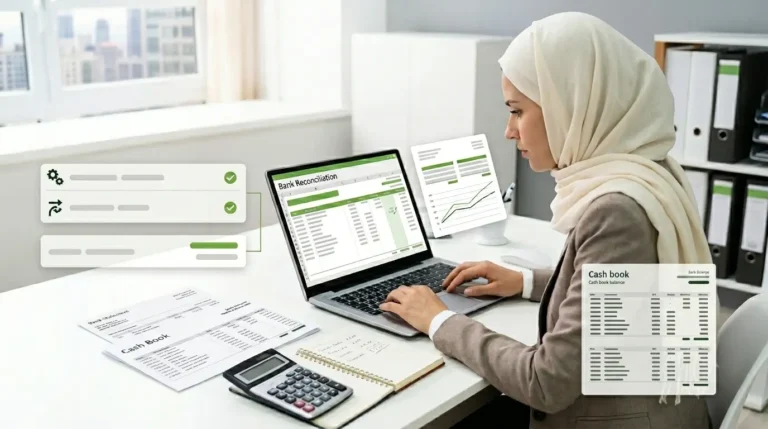
A bank recon statement is important because it helps businesses identify missing transactions, monitor cash flow, reduce financial errors, and prepare more reliable accounting records for tax, audit, and financial reporting purposes.
Why Bank Reconciliation Helps Identify Cash Flow Differences
Cash flow differences happen when customer payments, supplier transfers, bank deductions, or cheque clearances appear in one record but not yet in another.
Why Bank Balance and Book Balance Often Do Not Match
The bank balance and book balance often differ because of timing delays, unrecorded bank transactions, outstanding payments, deposits in transit, or errors in either record.
It Helps Detect Errors, Omissions, and Fraud
A proper reconciliation process can reveal duplicate payments, incorrect posting amounts, unauthorised withdrawals, missed receipts, or unusual transactions that require further investigation.
How Missing or Duplicate Transactions Affect Financial Accuracy
Missing and duplicate transactions distort cash balances, profit reporting, tax calculations, supplier records, and management decisions because the accounts no longer reflect the real business position.
It Supports Tax, Audit, and Financial Reporting
A bank reconciliation statement supports tax compliance, audit preparation, and management reporting by confirming that bank-related transactions are properly recorded and supported by relevant documents.
Why SMEs Should Keep Reconciliation Records Properly
SMEs should keep reconciliation records because supporting documents help accountants, tax agents, auditors, and business owners explain differences during financial review or compliance checks.
What Are the 10 Common Items Found in a Bank Recon Statement?
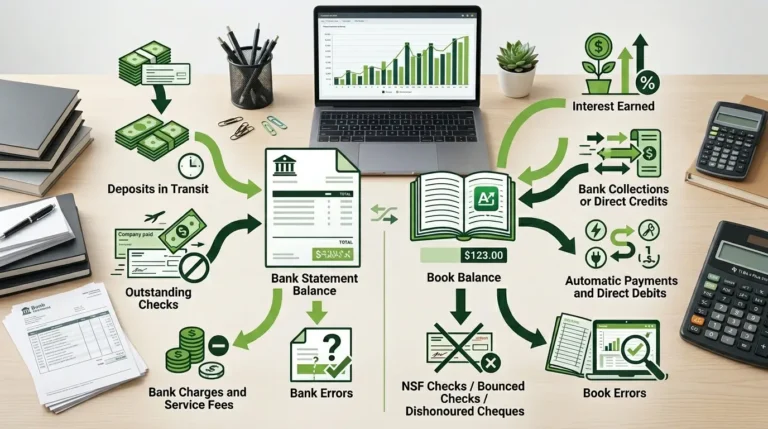
The 10 common items found in a bank recon statement usually include bank balance, book balance, deposits in transit, outstanding checks, bank charges, interest, direct credits, automatic payments, dishonoured cheques, and errors.
1. Bank Statement Balance
The bank statement balance is the closing cash balance reported by the bank after processing deposits, withdrawals, transfers, fees, and other account movements.
Starting Point from the Bank’s Record
This balance is normally taken directly from the monthly bank statement and used as one side of the reconciliation process.
2. Cash Book Balance or Book Balance
The cash book balance is the company’s recorded bank account balance according to its accounting system, cash book, ledger, or bookkeeping records.
Starting Point from the Company’s Accounting Record
This balance reflects what the business believes it has in the bank based on sales receipts, payments, transfers, accounting entries, and the basic logic of Bookkeeping Debits and Credits.
3. Deposits in Transit
Deposits in transit are receipts recorded by the business but not yet credited by the bank because of processing time or clearance delays.
Money Recorded in the Books but Not Yet Reflected by the Bank
These deposits are usually added to the bank statement balance when preparing the adjusted bank balance.
Also Known as Uncredited Cheques or Lodgements
These terms refer to receipts already entered by the business but not yet credited by the bank due to clearance or processing delays.
4. Outstanding Checks
Outstanding checks are payments issued and recorded by the company but not yet presented, processed, or cleared by the bank.
Payments Issued but Not Yet Cleared by the Bank
These payments are usually deducted from the bank statement balance because the company has already committed the payment.
Also Known as Unpresented Cheques
Unpresented cheques are payments already issued by the business but not yet presented to the bank by the recipient.
5. Bank Charges and Service Fees
Bank charges and service fees are deductions made by the bank for account maintenance, transaction processing, cheque services, or online banking facilities.
Charges Deducted by the Bank but Not Yet Recorded in the Books
These charges usually reduce the book balance because the bank has already deducted them before the business records the expense.
6. Interest Earned
Interest earned is income credited by the bank to the business bank account, usually from savings balances or interest-bearing accounts.
Bank Interest Credited but Not Yet Recorded by the Business
This amount is usually added to the book balance because the bank has already credited the income.
7. Bank Collections or Direct Credits
Bank collections or direct credits are payments received directly into the company’s bank account before the business records them in its books.
Customer Payments Collected Directly by the Bank
These items may include customer transfers, merchant settlements, standing collections, or receivables collected through banking arrangements.
Examples Include Credit Transfers, Giro Payments, and Receivables Collected by the Bank
These examples show payments received directly through banking channels before the accounting team records them in the company’s books.
8. Automatic Payments and Direct Debits
Automatic payments and direct debits are recurring deductions processed by the bank for expenses, loans, subscriptions, utilities, or instalments.
Payments Deducted Automatically from the Bank Account
These payments reduce the book balance because the bank has deducted them before the accounting team records the expense.
Examples Include Standing Orders, Subscriptions, Loan Payments, and Utility Payments
These payments are usually deducted automatically, so businesses must check bank statements carefully to ensure each expense is recorded correctly.
9. NSF Checks, Bounced Checks, or Dishonoured Cheques
NSF checks, bounced checks, or dishonoured cheques are payments rejected by the bank because of insufficient funds, invalid details, or clearance failure.
Payments Reversed Because of Insufficient Funds or Failed Clearance
These items must be adjusted because the business may have recorded the receipt before the bank confirmed the payment failure.
10. Bank Errors and Book Errors
Bank errors and book errors are mistakes made either by the financial institution or the business when recording, processing, or classifying transactions.
Mistakes That Must Be Investigated Before Finalizing the Statement
Errors should not be adjusted blindly because businesses must identify whether the mistake belongs to the bank side or the accounting side.
Examples of Bank Errors
Bank errors are mistakes made by the financial institution, and the business should verify them with bank records before adjusting the reconciliation.
Wrong deposit amount, duplicate deduction, or incorrect bank posting
These errors should be investigated with supporting documents because they may require bank correction instead of accounting adjustment.
Examples of Book Errors
Book errors are mistakes made in the company’s accounting records and usually require correction through bookkeeping updates or journal entries.
Wrong entry amount, duplicate entry, missed transaction, or incorrect classification
These errors affect the company’s book balance and should be corrected before the bank recon statement is finalised.
Bank Reconciliation Statement Format
A bank reconciliation statement format normally separates the bank statement balance and cash book balance before adjusting each side until the corrected balances agree.
Basic Format for Bank Reconciliation for SMEs
A basic format for bank reconciliation helps SMEs organise each reconciling item clearly.
Bank Statement Balance Section
The bank statement balance section adjusts items already recorded in the company books but not yet processed by the bank.
Add Deposits in Transit
Deposits in transit are added because the company has already recorded the receipt, but the bank has not yet credited it.
Less Outstanding Checks
Outstanding checks are deducted because the company has already issued the payment, but the bank has not yet cleared it.
Add or Less Bank Errors
Bank errors are added or deducted depending on whether the mistake wrongly increased or reduced the bank statement balance.
Adjusted Bank Balance
The adjusted bank balance is the corrected bank-side figure after all timing differences and bank-side errors are considered.
Cash Book Balance Section
The cash book balance section adjusts items already processed by the bank but not yet recorded in the company’s accounting records.
Add Interest Earned and Bank Collections
Items credited directly by the bank increase the book balance because the business has not yet recognised the receipt or income.
Less Bank Charges
Bank charges are deducted from the cash book balance because the bank has already charged the account before the business records the expense.
Less Automatic Payments
Automatic payments are deducted because they have already been processed by the bank but may not yet appear in the company’s accounting records.
Less NSF or Dishonoured Checks
NSF or dishonoured checks are deducted because the receipt was previously recorded but later rejected or reversed by the bank.
Adjusted Cash Book Balance
The adjusted cash book balance is the corrected accounting-side figure after bank-processed items and book-side adjustments are recorded.
Final Bank Reconciliation Check
The final reconciliation check confirms whether the adjusted bank balance matches the adjusted cash book balance after all reconciling items are recorded.
Adjusted Bank Balance Must Match Adjusted Book Balance
When both adjusted balances match, the reconciliation is complete and the business can rely on the corrected cash position.
How to Prepare a Bank Recon Statement Step by Step
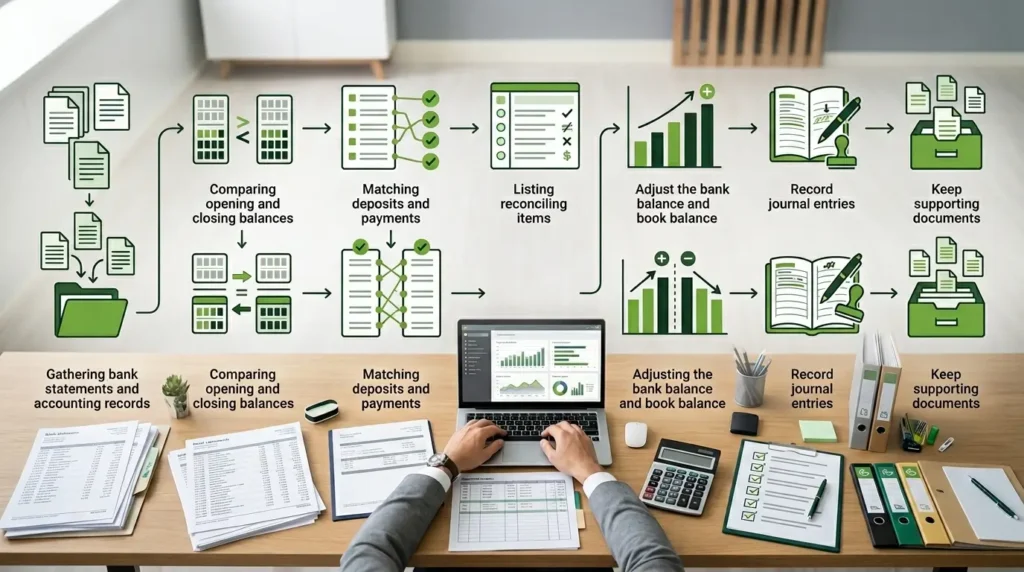
A bank recon statement is prepared by collecting records, matching transactions, identifying differences, adjusting balances, and recording necessary accounting entries.
Step 1: Gather Bank Statements and Accounting Records
Businesses should begin by collecting the monthly bank statement, cash book, accounting ledger, payment vouchers, receipts, cheque records, and online banking transaction reports.
Documents Needed Before Bank Reconciliation
The documents should cover the same accounting period so that receipts, payments, transfers, and bank deductions can be compared accurately.
Step 2: Compare Opening and Closing Balances
Opening and closing balances should be checked first because errors from a previous month can affect the current reconciliation.
Why Prior Month Balances Must Be Checked First
If last month’s adjusted balance was incorrect, the current month may show unexplained differences even when current transactions are recorded properly.
Step 3: Match Deposits and Payments
Matching deposits and payments helps the business confirm which transactions appear in both the bank statement and company accounting records.
How to Identify Matched and Unmatched Transactions
Matched transactions require no adjustment, while unmatched transactions must be classified as timing differences, bank-side items, book-side items, or errors.
Step 4: List Reconciling Items
Reconciling items should be listed clearly in the bank reconciliation statement so that reviewers can distinguish outstanding transactions from items requiring accounting correction.
Separating Timing Differences from Real Errors
Timing differences may clear later, but real errors need correction through journal entries, reversal entries, bank follow-up, or bookkeeping adjustments.
Step 5: Adjust the Bank Balance and Book Balance
The bank balance and book balance must be adjusted using the correct treatment for each reconciling item.
Which Items Adjust the Bank Side
Bank-side adjustments usually include transactions already recorded by the company but not yet reflected in the bank statement.
Deposits in Transit
Deposits in transit adjust the bank side because they appear in the company’s records but have not yet cleared into the bank account.
Outstanding Checks
Outstanding checks adjust the bank side because they appear in the company’s records but have not yet reduced the bank statement balance.
Which Items Adjust the Book Side
Book-side adjustments usually include bank-processed transactions that the company has not yet entered into the accounting records.
Bank Charges
Bank charges adjust the book side because the bank has deducted them before the business records the expense.
Interest Earned
Interest earned adjusts the book side because the bank has credited the account before the business records the income.
Direct Debits
Direct debits adjust the book side because the bank has processed the payment before the company records the expense or liability reduction.
Bank Collections
Bank collections adjust the book side because money has entered the bank account before the business records the customer receipt.
Step 6: Record Journal Entries
Journal entries are needed when reconciling items affect the company’s book balance, income, expenses, receivables, payables, or bank ledger.
When Book Adjustments Need Accounting Entries
Examples include recording bank charges as expenses, interest as income, direct debits as payments, and dishonoured cheques as reversed receipts.
Step 7: Keep Supporting Documents
Supporting documents should be kept to prove why each adjustment was made and to help future audit, tax, or financial review work.
Why Proper Documentation Helps During Audit and Tax Review
Documents such as receipts, bank slips, payment records, and reconciled statements help accountants explain transactions clearly during compliance or advisory review.
Common Bank Recon Statement Errors to Avoid
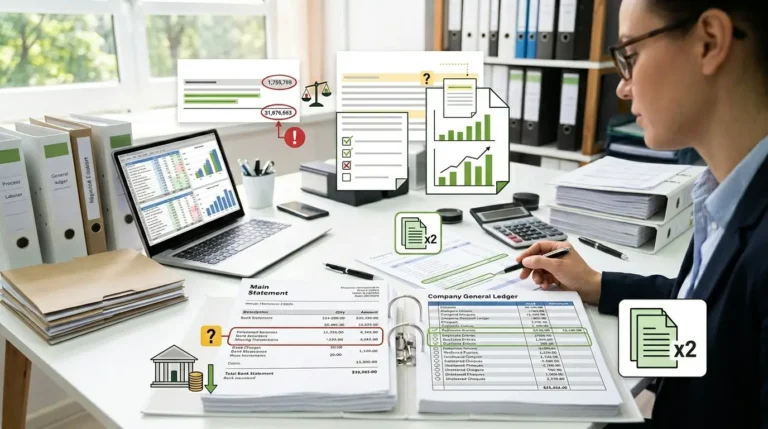
Common bank recon statement errors include ignoring small differences, delaying reconciliation, missing automatic transactions, misclassifying timing differences, and failing to maintain an audit trail.
Ignoring Small Differences
Small differences should not be ignored because they may indicate duplicate entries, missed charges, incorrect receipts, or posting mistakes in the accounting records.
Why Small Variances Can Signal Bigger Recording Issues
A small bank variance may appear harmless, but repeated unresolved differences can weaken financial reporting and create unreliable cash records.
Delaying Monthly Bank Reconciliation
Delayed reconciliation makes it harder to trace errors because documents may be misplaced and transaction details may no longer be fresh.
How Late Reconciliation Creates More Complex Errors
When reconciliation is delayed, businesses may carry forward old differences, duplicate adjustments, miss supplier payments, or rely on inaccurate cash balances.
Forgetting Bank Charges and Auto Payments
Bank charges and automatic payments are often missed because they are initiated by the bank, not directly entered by the business team.
Why Bank-Initiated Transactions Are Often Missed
Examples include monthly bank fees, loan repayments, software subscriptions, standing orders, and payment gateway deductions.
Recording Timing Differences as Errors
Timing differences should not be treated as errors because they usually happen when one record updates earlier than another.
How to Separate Normal Clearance Delays from Actual Mistakes
A deposit in transit or outstanding cheque may clear in the next period, while a wrong amount or duplicate entry requires correction.
Not Keeping an Audit Trail
An audit trail is necessary because every adjustment should have supporting evidence, responsible personnel, review notes, and proper accounting treatment.
Why Every Adjustment Should Have a Clear Explanation
Clear explanations help business owners, accountants, tax agents, auditors, and advisors understand why balances were adjusted.
Manual vs Automated Bank Reconciliation
Manual and automated bank recon statement preparation both compare bank data with accounting records, but they differ in speed, control, scalability, and error risk.
Manual Bank Reconciliation
Manual bank reconciliation is suitable for businesses with fewer transactions, simple bank activity, and basic accounting records.
Suitable for Businesses with Low Transaction Volume
A small business may prepare its bank recon statement using a spreadsheet or accounting ledger when monthly transactions are limited and easy to review.
A consistent format for bank reconciliation should still be used so that the preparer and reviewer can follow each adjustment.
Automated Bank Reconciliation
Automated bank reconciliation uses accounting software, bank feeds, matching rules, and digital records to accelerate transaction matching.
Suitable for SMEs with Frequent Bank Transactions
Businesses with online sales, multiple bank accounts, payroll payments, supplier transfers, and payment gateway settlements benefit from automation.
Which Method Should Malaysian SMEs Use?
Malaysian SMEs should choose the reconciliation method based on transaction volume, bookkeeping quality, accounting software readiness, and compliance needs.
Choosing Based on Transaction Volume, Accounting System, and Compliance Needs
A growing SME may start manually but should consider automation once transaction volume increases or management needs faster reporting.
When Should a Business Prepare a Bank Recon Statement?

A business should prepare a bank recon statement regularly, usually monthly, and more frequently when transaction volume, audit requirements, or cash control risks are higher.
Monthly Reconciliation
Monthly reconciliation is the standard practice for many SMEs because it aligns with management accounts, month-end closing, and tax record preparation.
The Standard Practice for Most Businesses
A monthly schedule helps businesses identify errors early, update accounting records, and maintain reliable financial reports.
Weekly or Daily Reconciliation
Weekly or daily reconciliation is useful for high-volume businesses that handle frequent customer receipts, supplier payments, bank transfers, or merchant settlements.
Better for High-Transaction Businesses
Retailers, service providers, e-commerce sellers, and companies with multiple bank accounts may need more frequent reconciliation.
Before Tax Filing or Audit Review
Businesses should reconcile bank records before tax filing, audit review, financing applications, due diligence, or major management decisions.
Why Reconciled Records Reduce Financial Reporting Risk
Clean reconciliation records help reduce unexplained balances, incomplete accounts, and unreliable cash figures during financial review.
Final Thoughts on Bank Recon Statement Accuracy
Bank recon statement accuracy depends on consistent review, correct classification, proper documentation, and timely accounting adjustments.
Why Reconciliation Is More Than a Matching Exercise
Reconciliation is more than matching transactions because it supports cash control, internal governance, tax compliance, business advisory, and financial decision-making.
It Strengthens Cash Control, Compliance, and Business Decision-Making
For SMEs, corporations, startups, and restructuring businesses, accurate reconciliation helps build reliable accounting records for stronger decisions.
Businesses that want stronger reporting discipline can explore more guidance under Accounting Insights & Advisory, especially when reviewing accounting records, internal control, and financial reporting processes.
A bank recon statement helps businesses confirm whether bank records and accounting records are accurate, complete, and properly supported.
By reviewing items such as deposits in transit, outstanding checks, bank charges, interest, direct credits, automatic payments, dishonoured cheques, and errors, business owners can reduce reporting mistakes and strengthen cash control.
For SMEs, corporations, startups, and companies undergoing financial review, regular reconciliation supports better tax compliance, audit readiness, and management decisions.
If your business needs clearer accounting records, better financial reporting, or reliable support in reviewing bank transactions, Procheck can help you manage the process with practical accounting and advisory guidance.
Explore Procheck’s Accounting Services to support bookkeeping accuracy, compliance preparation, internal control review, and better decision-making for your business.
FAQ About Bank Recon Statement
What is the purpose of a bank reconciliation statement?
A bank reconciliation statement compares the balance shown in a company’s bank statement with the balance recorded in its accounting records. It helps identify deposits in transit, outstanding cheques, bank charges, direct credits, dishonoured cheques, automatic payments, and recording errors.
How do small businesses prepare a bank recon statement in Malaysia?
Small businesses can prepare a bank recon statement by collecting their bank statements, cash book records, receipts, payment vouchers, cheque records, and online banking reports. They should then match transactions, list unmatched items, adjust the bank and book balances, record necessary journal entries, and retain supporting documents.
Best software for bank recon statements suitable for Malaysian SMEs
The best software for Malaysian SMEs depends on transaction volume, reporting needs, budget, and accounting workflow.
Common options include cloud accounting platforms with bank feeds, matching rules, and reconciliation reports.
SMEs should choose software that supports proper bookkeeping, document retention, user access control, and accountant review.
How often should a business perform bank reconciliation?
A business should usually perform bank reconciliation monthly, especially when preparing management accounts, tax records, and financial reports.
High-volume businesses may need weekly or daily reconciliation if they handle frequent customer receipts, supplier payments, merchant settlements, payroll transactions, or multiple bank accounts.
What is bank reconciliation software used for?
Bank reconciliation software helps businesses import bank transactions, match them with accounting records, identify unmatched items, and prepare reconciliation reports. Malaysian SMEs should select software based on transaction volume, reporting needs, accounting workflow, budget, and internal control requirements.